Anti Bullying
As parents and carers, you all want your child to be happy and safe, and it is natural to worry about bullying – particularly if you have experienced bullying yourselves or think your child may be more vulnerable to bullying. The good news is you are not alone! Barnett Wood Infant School, as well as many other charities and organisations, are here to work with children, families, and others to help keep children safe.
Pupils and parents should be assured that known incidents of bullying will be responded to and dealt with immediately. Bullying will not be tolerated. We will also seek to work in the local community to counter the effects of bullying. The ethos of our school fosters an extremely high expectations of behaviour and we will consistently challenge any behaviour that falls below this.
What is bullying?
One of the main things that we need to do is to identify what bullying is. This can be a difficult concept for children (and adults!) to understand. The Anti-Bullying Alliance and its members have a shared definition of bullying based on research from across the world over the last 30 years. The Anti Bullying Alliance defines bullying as:
“the repetitive, intentional hurting of one person or group by another person or group, where the relationship involves an imbalance of power. Bullying can be physical, verbal or psychological. It can happen face to face or online”.
Bullying behaviour can be:
- Physical – pushing, poking, kicking, hitting, biting, pinching etc.
- Verbal - name calling, sarcasm, spreading rumours, threats, teasing, belittling.
- Emotional – isolating others, tormenting, hiding books, threatening gestures, ridicule, humiliation, intimidating, excluding, manipulation and coercion.
- Sexual – unwanted physical contact, inappropriate touching, abusive comments, homophobic abuse, exposure to inappropriate films etc.
- Online /cyber – posting on social media, sharing photos, sending nasty text messages, social exclusion.
- Indirect - Can include the exploitation of individuals.
We always want to ensure your child feels safe and listened to here at Barnett Wood. Every November, we take part in Anti-Bullying Week. This is an opportunity to spotlight bullying and consider the steps we can take together to stop it. Anti-Bullying Week will look at lots of different types of bullying including emotional, physical and cyber. In addition, it focuses on how kindness and friendship can combat bullying and how by following our school’s values and rules, we can help create a safe learning space at our school.
As a parent or carer, you are a vital piece of the puzzle in tackling bullying. You have a unique role to play in guiding and supporting your child through their school years and there are many positive steps you can take to help keep your child safe from bullying and harm. One of the main things that really helps, is to guide children’s understanding of what conflict is, when children are being mean, when they are being rude, and when they are being bullied. This poster is a useful guide to help families differentiate between these different contexts and to provide children with the necessary tools to respond to these situations.
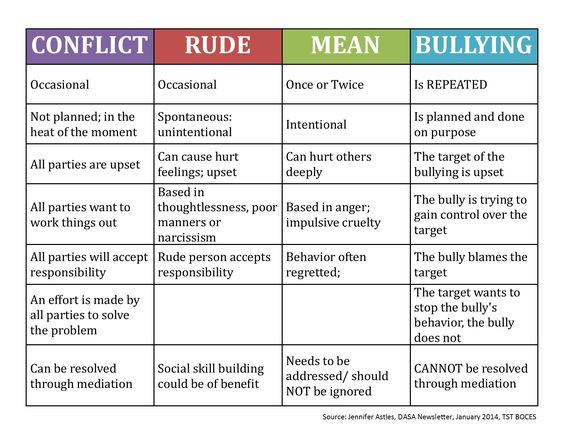
Unfortunately, even as adults, there will be times where we come across conflict and where people are rude or mean. We teach children how to manage these situations and to ensure they remain assertive, rather than passive or aggressive. We use our school values and our school rules to help children acknowledge this.
Our approach to teaching about bullying is proactive and embedded throughout the school year to help children understand what bullying is and how to respond to it.
-
Curriculum Integration: We use the Jigsaw PSHE curriculum, where the topic of bullying is covered in the unit called "Celebrating Differences." This ensures children learn about kindness, respect, and how to celebrate diversity.
-
Annual Anti-Bullying Week: Every year, we hold an Anti-Bullying Week, to focus on promoting kind behaviour and raising awareness about bullying in a child-friendly way.
-
Classroom and Whole School Activities: Through circle time, assemblies, and cross-curricular topics, children explore what bullying looks like, how it differs from unkind or rude behaviour, and the importance of positive relationships.
-
Internet Safety and Cyberbullying: We teach children how to stay safe online, emphasising the importance of using the internet responsibly and telling an adult if anything online makes them feel uncomfortable or upset.
-
Pupil Voice: Children are encouraged to share their views and contribute to updating school and classroom rules to ensure everyone understands expectations around behaviour.
-
Restorative Approaches: Where appropriate, we use restorative justice techniques to help children understand the impact of their behaviour and encourage apologies and reconciliation.
-
Parental Involvement: We engage parents through information events and encourage them to support our anti-bullying ethos at home.
By embedding these teaching strategies, we aim to empower our pupils to recognise bullying, feel confident to report it, and develop positive, respectful relationships with others.
Recommended Websites for Parents on Anti-Bullying
-
Anti-Bullying Alliance (ABA)
- Website: www.anti-bullyingalliance.org.uk
- Description: A leading coalition of organisations and individuals working together to stop bullying. Offers clear guidance, resources, and advice for parents on how to identify, prevent, and respond to bullying.
-
Kidscape
- Website: www.kidscape.org.uk
- Description: Provides practical advice for parents and carers on how to protect children from bullying and abuse, including helplines and workshops.
-
Childline
- Website: www.childline.org.uk
- Description: Offers confidential advice and support for children and young people experiencing bullying. Parents can also find guidance on how to support their children.
-
NSPCC (National Society for the Prevention of Cruelty to Children)
- Website: www.nspcc.org.uk
- Description: Provides advice and resources for parents on bullying and online safety, including how to talk to children about bullying and where to seek help.
-
Thinkuknow (by CEOP)
- Website: www.thinkuknow.co.uk
- Description: Focuses on online safety education, helping parents understand cyberbullying and how to keep children safe online.
-
Family Lives
- Website: www.familylives.org.uk
- Description: Offers support and information for parents on a range of issues including bullying, with a helpline and online resources.